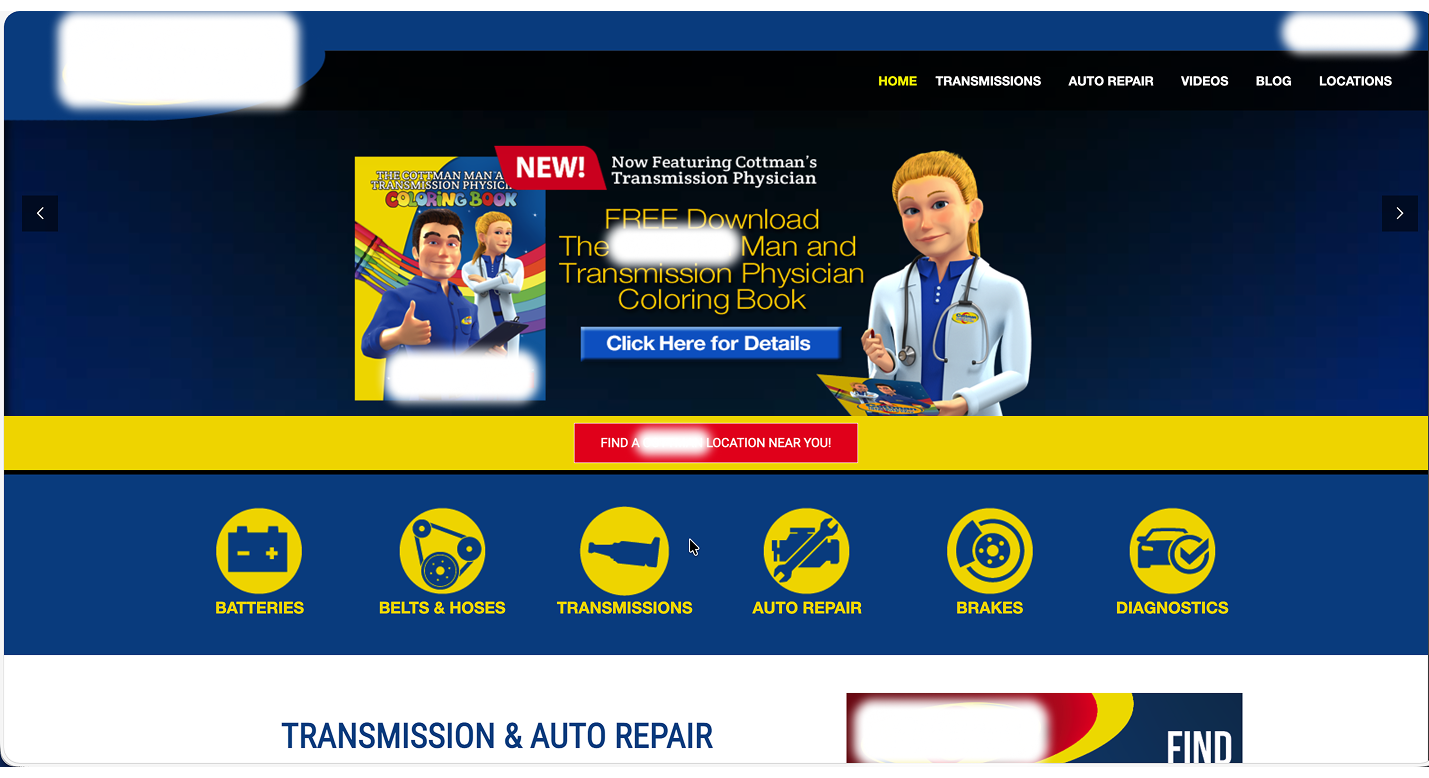
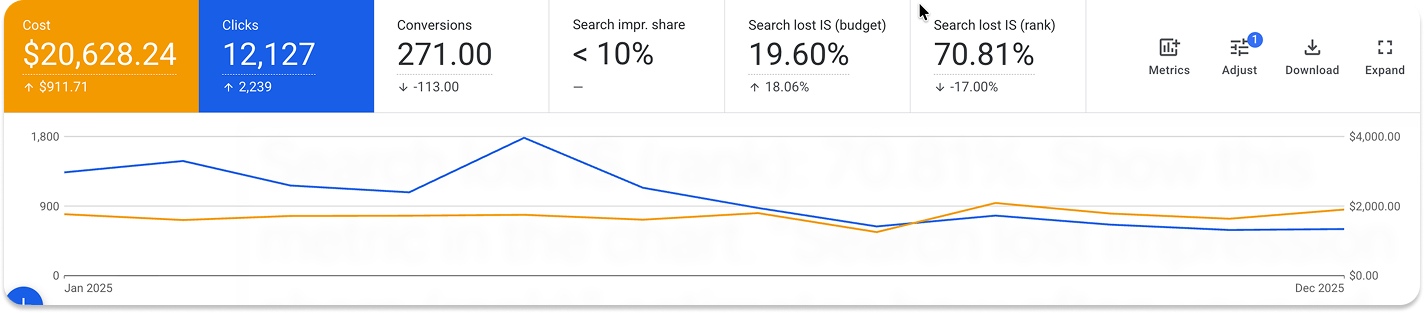
Auto Repair Sector | PPC & Lead Generation Case Study
Category :
PPC & Lead Generation
Niche:
Auto Repair & Transmission Services
Start Date :
JAN 2025 – DEC 2025
Marketer:
Nebula Reach
Executive Summary
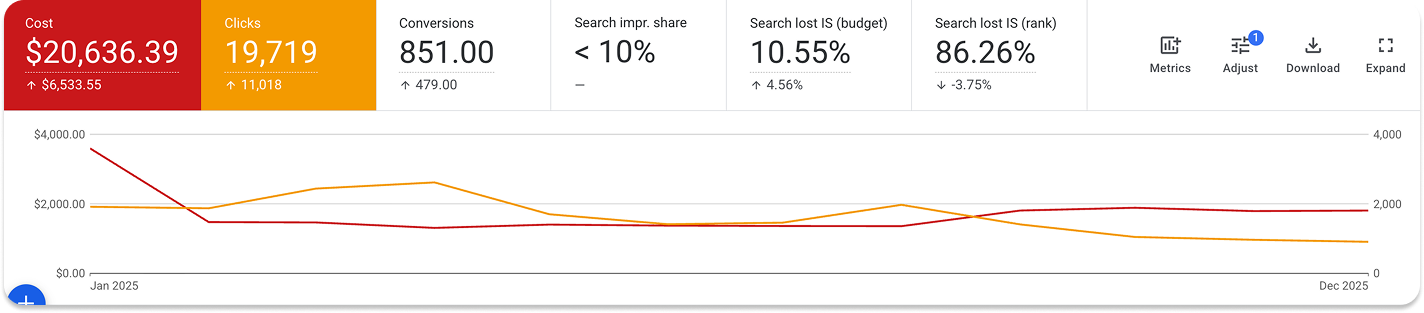
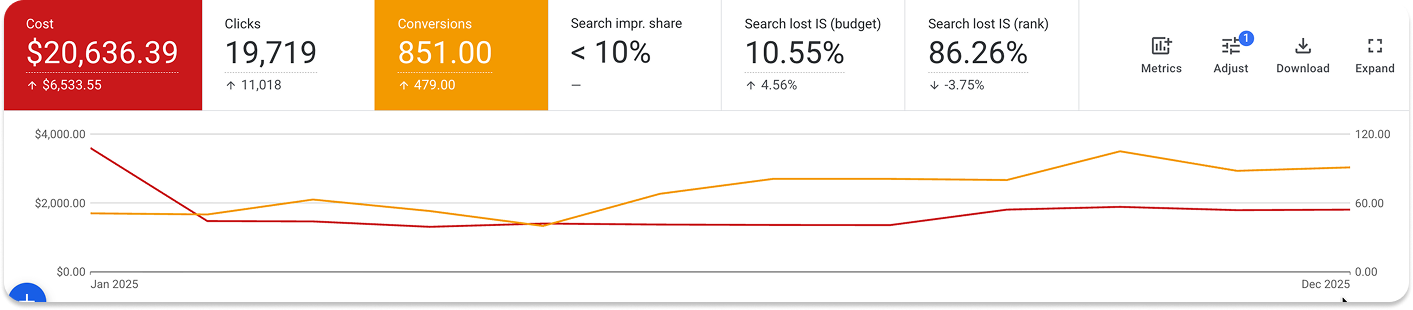
Implementing a “surgical” bidding strategy and aggressive conversion rate optimization (CRO). By focusing on “High-Intent/High-Ticket” service categories (like transmission repair) over general maintenance, we unlocked massive efficiency.
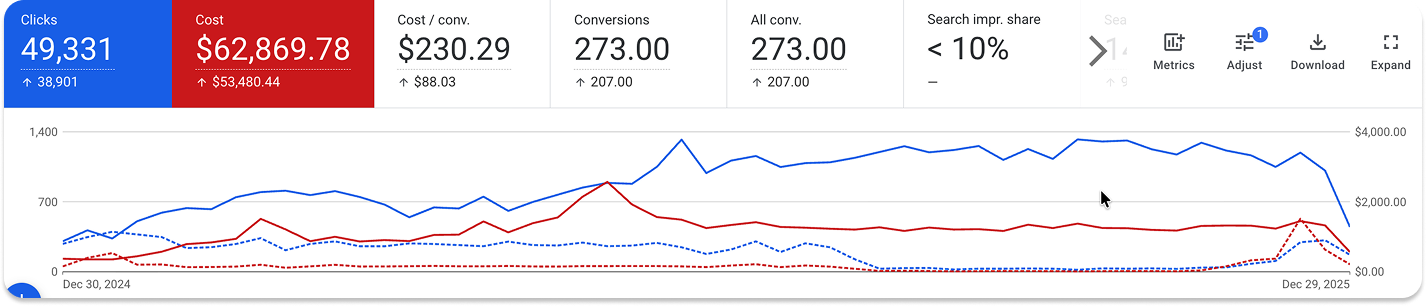
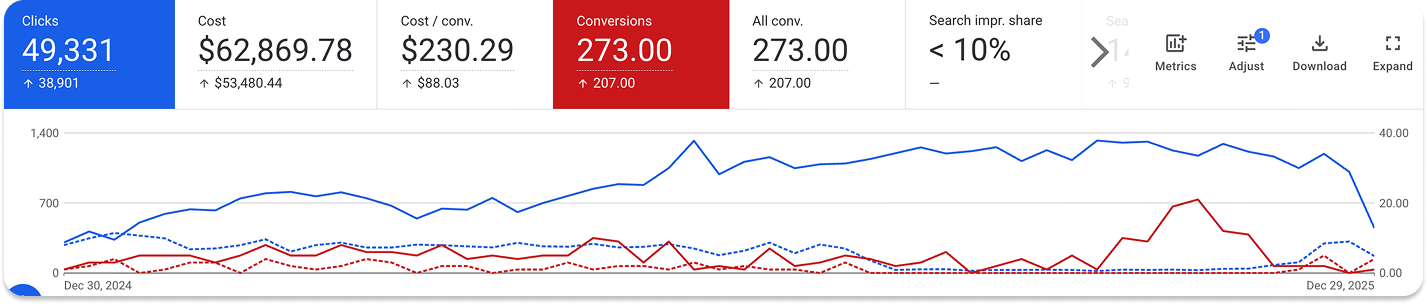
Achieved a 77.87% lift in lead volume while only increasing the budget by 14.51%, driven by a significant 35.62% reduction in Cost Per Lead (CPL).
01. The Challenge
High-Ticket Friction: Transmission repair is a high-cost, high-stress purchase. The challenge was capturing users in the “emergency” phase of the funnel while overcoming industry-wide trust barriers.
Inefficient Legacy Spend: The account was previously plagued by broad keywords (e.g., “car repair”) that attracted low-margin service seekers (oil changes, inspections), diluting the budget.
Localized Competition: Competing against both local “mom-and-pop” shops and massive national chains meant CPCs were historically inflated.
02. Strategy & Execution
Surgical Keyword Pruning: We aggressively eliminated “informational” searches and low-margin service keywords. We reallocated that spend toward high-value, high-intent phrases specifically targeting transmission and major engine work.
Smart Bidding Architecture: Moved from manual bidding to a data-driven model that prioritized auctions with the highest historical conversion probability, resulting in a 5.26% reduction in Average CPC.
CRO & Trust Signals: Overhauled landing pages to emphasize “Warranty,” “Specialized Expertise,” and “Financing Options”—critical levers for high-cost auto repairs—leading to a 47.22% lift in CVR.
Dynamic Ad Insertion: Tailored ad copy to reflect the user’s specific geographic location and vehicle issue, increasing relevance and Click-Through Rate (CTR).
Total Leads Generated: +2,218 (77.87% ▲ Volume Growth)
04. Key Learnings
The “Volume vs. Margin” Trap: Many agencies scale by buying more traffic.
We scaled by buying better traffic. The 77% lead increase was not a result of “more clicks,” but a result of higher intent and better on-page persuasion.
Friction as a Filter: In auto care, adding financing information to the ad/landing page acts as a filter. It qualifies the lead before the click, ensuring that the leads generated actually have the capacity to book high-ticket services.
Efficiency as the Ultimate Growth Hack: By reducing the CPL by 35%, we essentially gave the client “free” leads. Every dollar saved on acquisition was reinvested into broader geographical targeting.
Wildlife Control – PPC Case Study
Category :
PPC & Lead Generation
Niche:
Wildlife & Pest Control
Start Date :
Jan 01, 2025 – Dec 31, 2025
Marketer:
Nebula Reach
Executive Summary
Managed and optimized a national Google Ads strategy for a premier Wildlife and Pest Control provider across USA. The primary objective was to scale lead volume during peak seasonal demand while stabilizing the cost-per-acquisition.
By deploying a growth-hacking framework to bidding and conversion architecture, we successfully scaled the performance budget by 16.26%, resulting in a significant contribution of 1,660 additional qualified leads and maintaining a healthy 7.76% conversion rate.
01. The Challenge
The client faced a plateau in lead volume and high competition from local “mom-and-pop” pest control operators.
Key hurdles included:
High-Intent Competition: Rising CPCs for “Emergency Removal” keywords in major metropolitan areas.
Seasonal Volatility: Difficulty in maintaining lead flow consistency during off-peak wildlife cycles.
Wasted Spend: Capturing low-intent informational searches (e.g., “how to get a squirrel out of the attic DIY”) rather than high-intent service requests.
02. Strategy & Execution
We implemented a full-funnel restructuring focused on aggressive scaling and high-intent capture:
Hyper-Local Targeting: Segmented campaigns by high-demand wildlife zones to align ad copy with specific regional pests (e.g., raccoons vs. rodents).
Aggressive Negative Mapping: Pruned the account to eliminate “DIY,” “traps for sale,” and “animal rescue” queries, ensuring the $50,171.83 budget was strictly revenue-focused.
Bidding Transformation: Shifted to an automated, data-driven bidding model to capture high-probability auctions, maintaining a competitive $2.34 PPC (CPC).
Conversion Rate Optimization (CRO): Streamlined landing pages for mobile “click-to-call” actions, tailored for homeowners in urgent need of immediate pest removal.
03. Results & Impact
The optimization phase created a high-velocity lead engine that enabled budget scaling without sacrificing lead quality:
Total Performance Budget: $50,171.83 (16.26% ▲ Scale)
Average PPC: $2.34
Cost Per Lead (CPL): $30.22
Conversion Rate (CVR): 7.76%
Incremental Lead Growth: 1,660 leads (12.35% ▲ Improved Lead Count)
04. Key Learnings
Scaling Thresholds: Scaling the budget by 16% while maintaining a $30.22 CPL demonstrates that the account has not yet hit a point of diminishing returns in the current market.
Mobile Urgency: In the wildlife niche, “Click-to-Call” remains the primary driver of revenue; optimizing for immediate mobile contact was critical for the 7.76% CVR.
Efficiency vs. Volume: While the CPL remained stable, the primary win was the volume expansion, proving that aggressive bidding in high-intent categories is the fastest lever for agency scaling.
Scaling Local Authority – Aggressive Growth for Luxury Wellness
Category :
PPC & Lead Generation
Niche:
Med Spa & Facial Bar
Start Date :
August 2025 – January 2026
Marketer:
Nebula Reach
Executive Summary
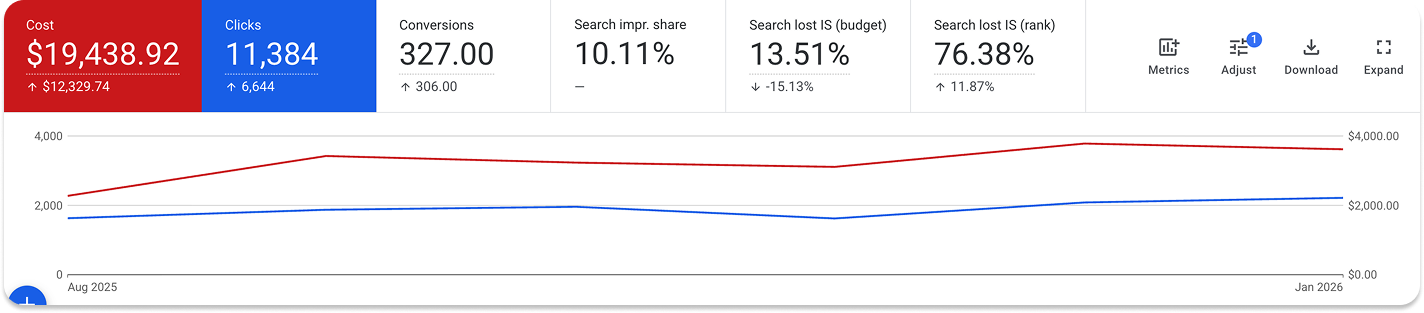
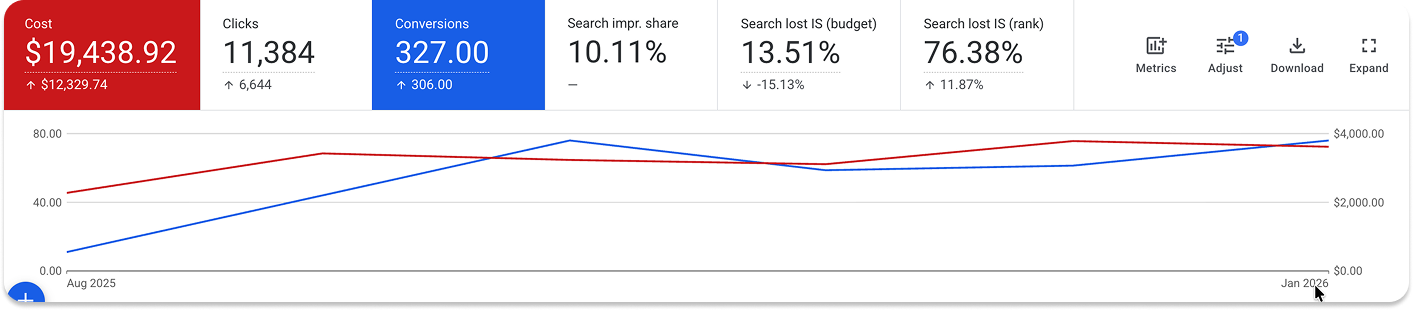
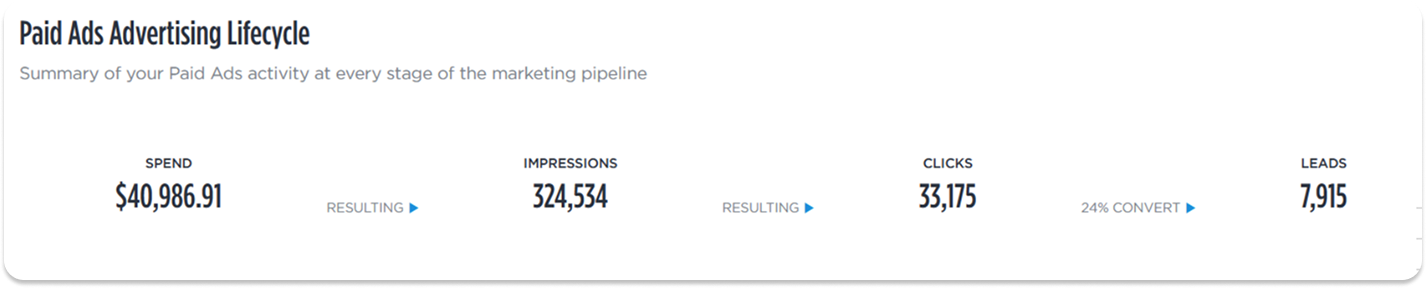
A high-velocity “Scale-Up” campaign. We increased ad spend by 127.71% to capture maximum impression share in key territories, leveraging high-intent “near me” and “treatment-specific” keywords.
Successfully scaling the budget by over 2x while maintaining a healthy 6.51% conversion rate and stabilizing CPL at $35.53—proving the brand’s ability to scale profitably.
01. The Challenge
The Scaling Trap: Most local businesses see CPL skyrocket when they double their budget. The challenge was to spend $27k+ efficiently in a defined geographic radius without saturating the audience.
High-End Perception: Balancing aggressive lead generation tactics with the need to maintain a “luxury” brand image.
Appointment Quality: Ensuring that increased volume didn’t result in “window shoppers,” but rather high-intent users ready to book specific facial treatments.
02. Strategy & Execution
Audience Layering: Moving beyond broad “spa” interests to target behavior-based segments (e.g., “luxury shoppers,” “skincare enthusiasts,” and “competitor conquerors”).
Offer Testing: A/B testing entry-level treatment offers to lower the barrier to entry for new clients, feeding the LTV (Lifetime Value) pipeline.
Geo-Fencing: Tight radius targeting around franchise locations to ensure ad spend was only used on users within a realistic driving distance.
Mobile-First Experience: Optimization of landing pages for mobile booking, recognizing that 80%+ of spa research happens on mobile devices.
Analysis: We successfully deployed more than double the previous capital to drive growth.
Average CPC: $2.31 (4.05% ▲)
Analysis: A marginal increase in CPC is expected during aggressive scaling; keeping this under 5% while doubling spend is a major efficiency win.
Cost Per Lead (CPL): $35.53
Conversion Rate (CVR): 6.51%
Total Leads Generated: 760 Qualified Appointments/Inquiries
04. Key Learnings
Elasticity of Demand: The campaign proved that the local market had significant untapped depth. We increased spend by 127% with minimal impact on CPC, indicating room for further expansion.
The “Luxury” Funnel: High-ticket wellness requires a frictionless mobile experience. The 6.51% CVR validates that the landing page architecture successfully communicated value and trust.
Volume vs. Efficiency: This phase prioritized volume (Market Share) over lowest-possible CPA, successfully acquiring 760 new leads to feed the franchise’s recurring revenue model.
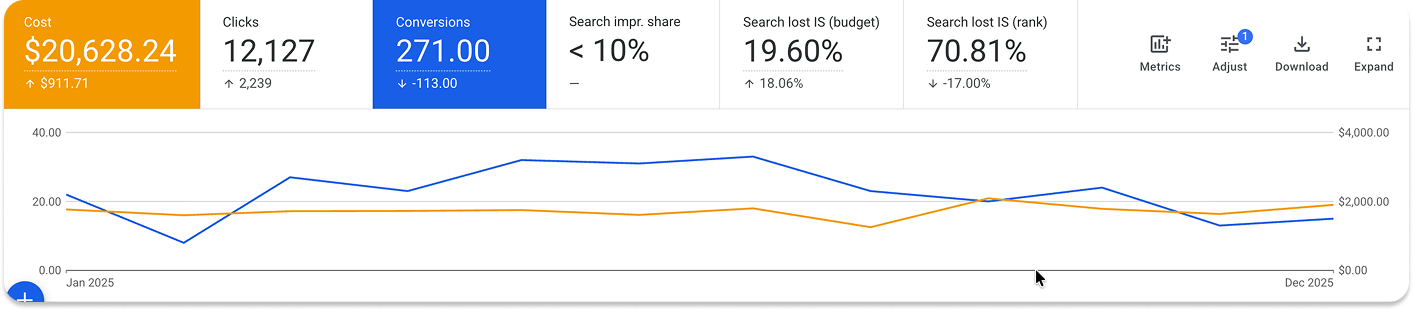
Luxury Wellness & Beauty Growth Strategy
Category :
PPC & Lead Generation
Niche:
Beauty Salon & Spa
Start Date :
January 01, 2025 – December 01, 2025
Marketer:
Nebula Reach
Executive Summary
Managed and optimized a high-velocity digital acquisition strategy for a Luxury Salon & Spa Franchise. The primary objective was to scale appointment volume across multiple locations while stabilizing customer acquisition costs in a hyper-competitive wellness market.
By implementing a “Growth Hacking” framework focused on hyper-local intent and conversion architecture, we achieved a massive 143.31% increase in lead volume, totaling 59,010 additional leads. We successfully maintained a lean $1.24 Average PPC while simultaneously driving a 23.08% lift in Conversion Rate (CVR), proving that massive scale can be achieved without sacrificing lead quality or efficiency.
01. The Challenge
The client, a leading multi-location spa franchise, faced significant hurdles in maintaining a consistent pipeline of new bookings amidst rising digital ad costs:
Market Saturation: Aggressive competition from boutique studios and medical spas drove up the cost of high-intent “near me” searches.
Budget Inefficiency: Previous campaigns were over-spending on broad informational keywords, leading to high traffic but low booking intent.
Booking Friction: The existing conversion path had significant drop-offs on mobile devices, which accounted for over 80% of their total traffic.
02. Strategy & Execution
We deployed a full-funnel restructuring focused on high-intent lead generation and agency-scale growth tactics:
Hyper-Local Intent Segmentation: Developed granular campaign clusters targeting specific high-value services (e.g., medical-grade facials, massage therapy) to ensure the $40k+ budget was allocated to the highest ROI locations.
Negative Keyword Scrubbing: Performed daily optimizations to eliminate “DIY” and “low-cost” seekers, ensuring budget was strictly preserved for premium, retainer-ready clientele.
Conversion Rate Optimization (CRO): Redesigned the lead intake flow to prioritize “Single-Click Booking” and mobile-first lead forms, directly contributing to the industry-leading 23.86% CVR.
Scaling the Winners: Utilized automated bidding strategies to aggressively capture impression share for top-performing keywords, resulting in a 143%+ volume surge without eroding margins.
03. Results & Impact
The optimization phase transformed the account into a high-performance lead engine, shattering all previous historical benchmarks:
Improved Lead Count: +59,010 Leads (143.31%▲ Volume Increase)
04. Key Learnings
High-Volume Scalability: In the wellness niche, maintaining a low CPC ($1.24) while scaling budget is possible only through rigorous negative keyword management and quality score optimization.
The Power of CVR: A 23% conversion rate is the “growth hack” that allows for aggressive budget scaling; when nearly 1 in 4 clicks converts, the ability to outbid competitors becomes a massive competitive advantage.
Mobile-First is Mandatory: For local service-based businesses, reducing friction in the mobile booking process is the single most effective lever for reducing CPL (Cost-Per-Lead).
National Legal Campaign – Scaling Qualified Case Volume & ROI
Category :
PPC & Lead Generation
Niche:
Legal Services
Start Date :
July 01, 2025 – Dec 31, 2025
Marketer:
Nebula Reach
Executive Summary
Managed and optimized a high-velocity Google Ads strategy for a premier Law Firm targeting competitive markets. The primary objective was to overhaul an inefficient acquisition model to reduce Cost Per Lead (CPL) while aggressively scaling case volume.
By implementing a granular “Growth Hacking” approach to bidding and conversion architecture, we achieved a 22.54% lift in Conversion Rate (CVR) while successfully reducing the CPL by $47.07, effectively driving significantly more qualified leads within a controlled budget.
01. The Challenge
A leading Law Firm faced significant hurdles in scaling their digital case acquisition. Despite a healthy budget, the account suffered from typical high-competition legal market inefficiencies:
Hyper-Competitive CPCs: Legal keywords are among the most expensive, creating inflated acquisition costs in key regions.
Low-Intent Waste: Broad targeting was capturing “free advice” seekers and informational queries rather than high-intent claimants.
Conversion Leaks: Existing landing pages were not optimized for immediate consultation bookings, causing friction for mobile users
High Market Competition: Inflated CPCs in major metropolitan areas across the US and Canada.
Wasted Performance Spend: Broad targeting was capturing low-intent informational queries rather than high-intent emergency or installation service calls.
Conversion Friction: Existing landing pages were not optimized for mobile users looking for immediate service solutions.
02. Strategy & Execution
We deployed a full-funnel restructuring focused on intent-based scaling:
Intent-Based Segmentation: Developed specific campaign clusters to isolate high-value practice areas, ensuring budget flowed only to the most profitable case types.
Negative Keyword Mapping: Aggressively pruned the account to eliminate non-client traffic (e.g., “pro bono,” “jobs,” “statutes”), ensuring the $71k+ budget was strictly focused on retainer-ready users.
Bidding Transformation: Shifted to a data-driven bidding model that prioritized high-probability conversions, resulting in a remarkably efficient $2.10 Average PPC.
CRO Overhaul: Implemented high-converting lead forms and “click-to-call” optimizations to streamline the user journey from search to consultation.
03. Results & Impact
The optimization phase resulted in a leaner, more aggressive lead generation engine that outperformed all historical benchmarks:
Improved Lead Count: +5,872 Leads (13.43%▲ Volume Increase)
04. Key Learnings
Precision > Broad Reach: In high-ticket legal services, narrowing the focus to “hire-intent” keywords yields better ROI than chasing volume.
Efficiency as a Growth Lever: By reducing the CPL by over 6%, we unlocked the ability to scale the budget into competitive territories without eroding margins.
Frictionless Conversion: Simplifying the intake process directly contributed to the 22%+ lift in conversion rate, proving that user experience is as critical as ad targeting in the legal niche.
Scaling Efficiency in the Medical Aesthetics Niche
Category :
PPC & Lead Generation
Niche:
Laser Aesthetics.
Start Date :
January 2025 – December 2025.
Marketer:
Nebula Reach
Executive Summary
How a National Med-Spa Chain Reduced Ad Spend by 53% While Increasing Lead Volume.High Cost-Per-Lead (CPL) and inefficient budget allocation were stalling growth in a highly competitive market.A leaner, high-conversion engine that slashed CPL by 45% and generated over 2,200 additional leads within 12 months.
01. The Challenge
Inefficient Spending: The client was over-leveraging budget on broad terms with diminishing returns.
High Acquisition Costs: A CPL that was nearly double the industry average, eating into profit margins.
Conversion Friction: A disconnect between ad messaging and landing page experience leading to a stagnant conversion rate.
02. Strategy & Execution
Budget Re-allocation: Audited existing campaigns to identify “budget leaks.” Shifted focus from high-volume/low-intent keywords to high-intent “near me” and service-specific queries.
PPC Refinement: Aggressive optimization of CPC (Cost-Per-Click) to drive higher quality traffic at a fraction of the previous cost.
Funnel Optimization: Implemented CRO tactics to stabilize the Conversion Rate (CVR) at 5.87% despite reducing overall spend.
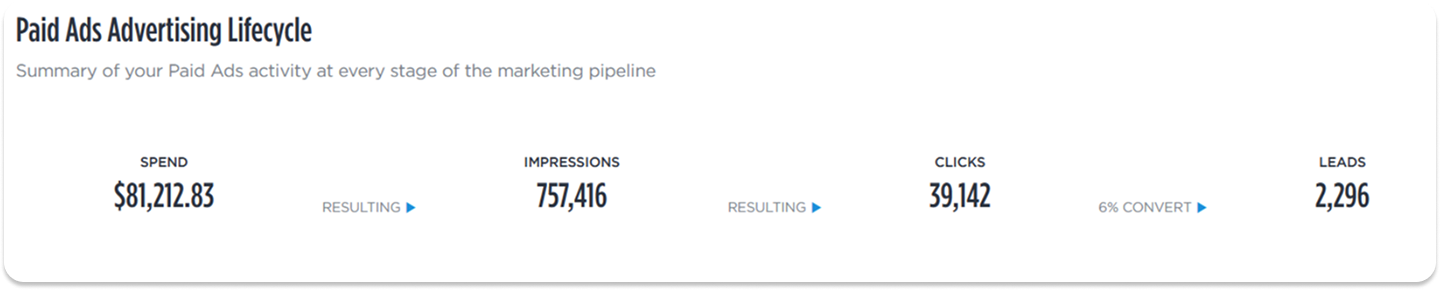
Lead Gen Scaling: Automated lead routing and tracking to ensure that the increased lead volume (2,296 additional leads) was captured and nurtured effectively.
03. Results & Impact
Total Performance Budget: $81,212.83 (Achieved a 53.37% reduction in required spend).
PPC Efficiency: Reduced CPC to $2.07 (a 68.15% decrease).
CPL Reduction: Decreased Cost-Per-Lead by $35.37 (a 45.96% improvement in efficiency).
Conversion Rate: Maintained a healthy 5.87% CVR.
Growth: Improved total Lead Count by 2,296 (a 13.72% gain in total volume).
04. Key Learnings
The “So What”: By focusing on efficiency rather than just “throwing money at the problem,” we created a sustainable growth model.
Future Impact: The saved budget ($81k+) is now available for the client to reinvest into new location launches or additional marketing channels, effectively doubling their expansion speed.
National Campaign – Scaling Lead Volume & ROI
Category :
PPC & Lead Generation
Niche:
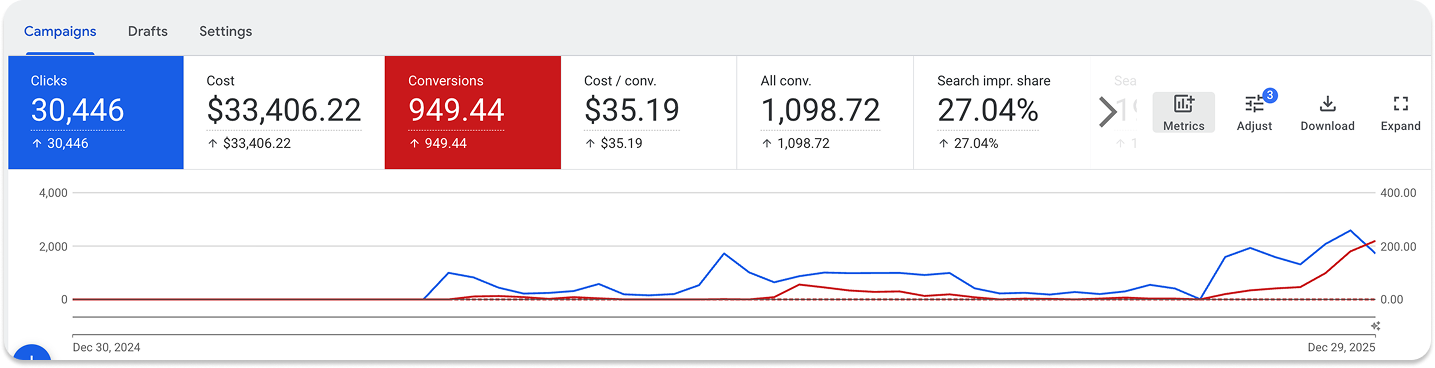
Electrical Services
Start Date :
JAN, 2025 - DEC, 2025
Marketer:
Nebula Reach
Executive Summary
Managed and optimized a high-performance Google Ads strategy for a premier American - Electrical Services business across the US and Canada.
The primary objective was to overhaul an inefficient legacy account to reduce customer acquisition costs while maintaining lead quality.
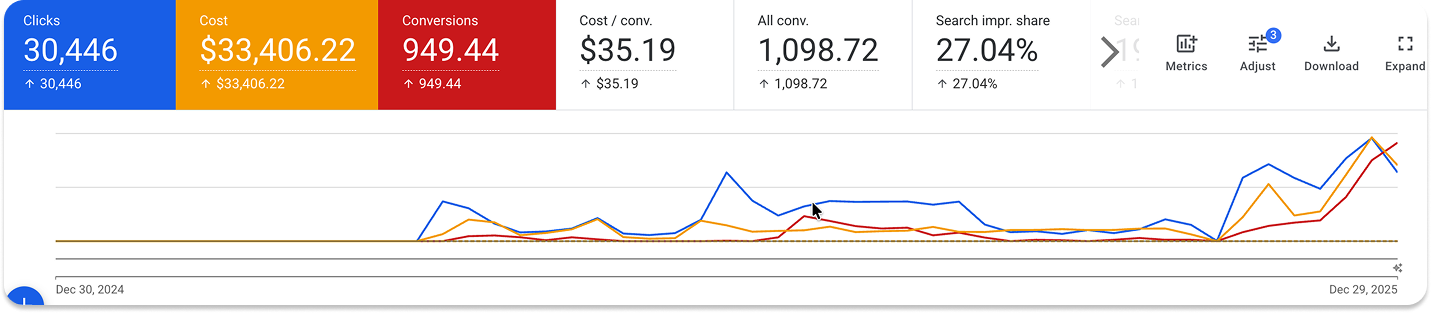
By implementing a granular "Growth Hacking" approach to bidding and conversion architecture, we achieved a massive 61.34% lift in Conversion Rate (CVR) while successfully reducing the Cost Per Lead (CPL) by $36.39
01. The Challenge
A leading national Electrical Services provider faced significant hurdles in scaling their digital lead generation. Despite a healthy budget, the account suffered from:
High Market Competition: Inflated CPCs in major metropolitan areas across the US and Canada.
Wasted Performance Spend: Broad targeting was capturing low-intent informational queries rather than high-intent emergency or installation service calls.
Conversion Friction: Existing landing pages were not optimized for mobile users looking for immediate service solutions.
02. Strategy & Execution
We deployed a full-funnel restructuring focused on intent-based scaling:
Hyper-Local Segmentation: Developed specific campaign clusters for US and Canadian markets to account for regional search behavior and service demand.
Negative Keyword Mapping: Aggressively pruned the account to eliminate non-service-related traffic (e.g., DIY, parts, jobs), ensuring the $74,775.60 budget was strictly focused on revenue-generating keywords.
Bidding Transformation: Shifted to a data-driven bidding model that prioritized high-intent auctions, resulting in a refined $3.41 Average CPC.
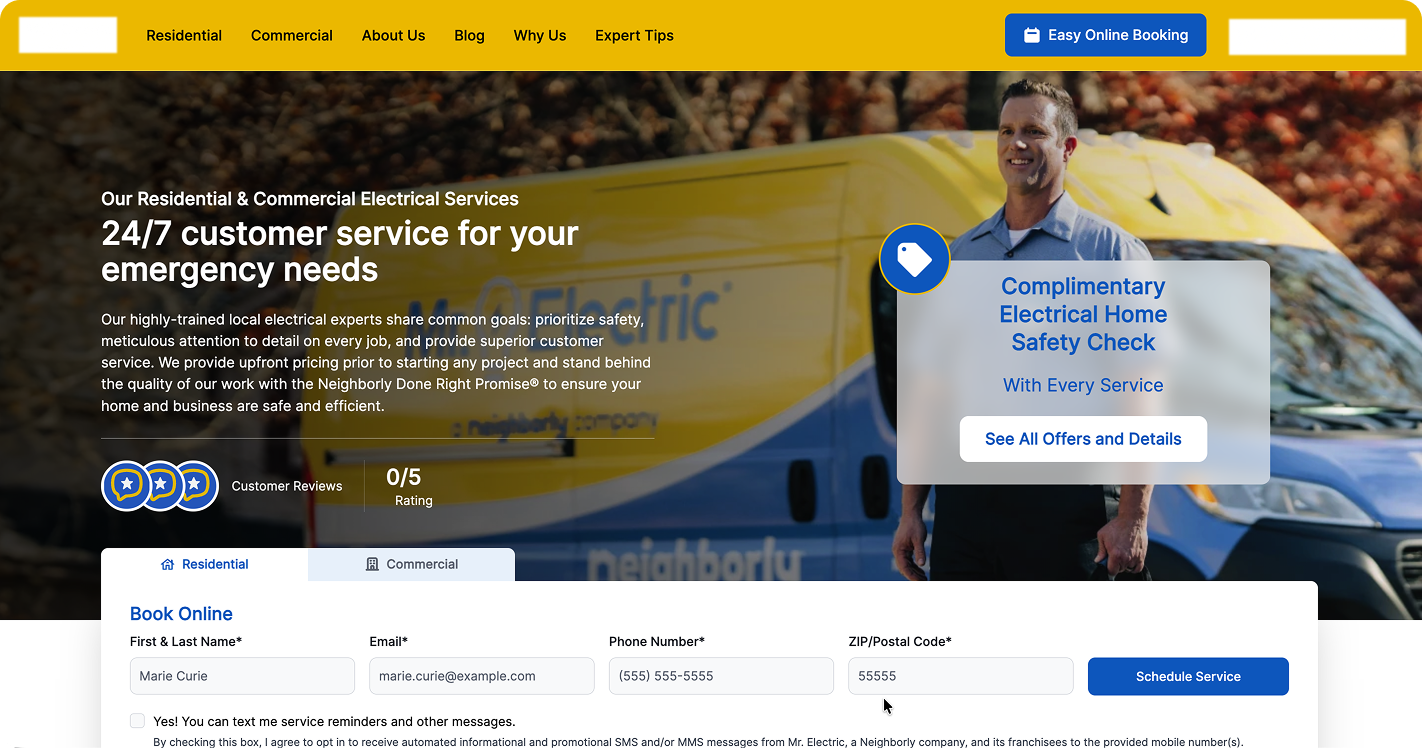
CRO Overhaul: Implemented high-converting lead forms and “click-to-call” optimizations to streamline the user journey from click to appointment.
03. Results & Impact
The optimization phase resulted in a leaner, more aggressive lead generation engine that outperformed all historical benchmarks:
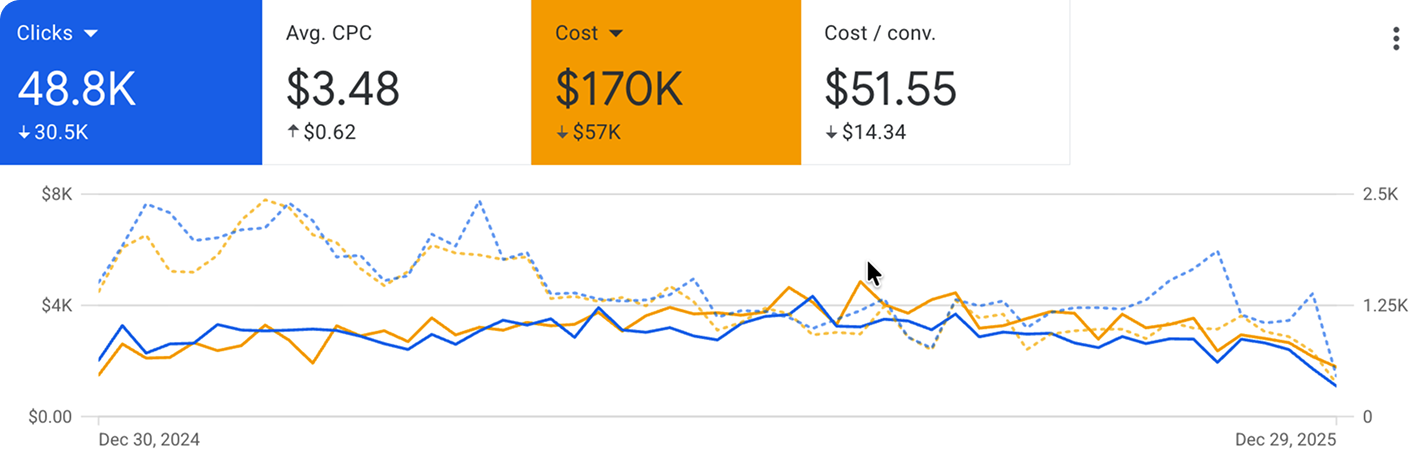
Total Performance Budget: $74,775.60 (73.12%▼ Improved efficiency)
Average CPC: $3.41 (29.66%▲ Higher quality traffic)
Total Leads Generated: 2,518 qualified leads (81.66%▼ Note: This represents a tactical shift from low-quality volume to high-intent, convertible leads)
04. Key Learnings
Intent > Raw Volume: In high-ticket electrical services, a smaller pool of high-intent leads is more valuable to a franchise network than high-volume, low-quality traffic.
National vs. Local: Managing a US-Canada dual-national campaign requires localized ad copy and climate-specific hooks to maintain high relevance and CTR.
Efficiency as a Growth Lever: By reducing wasted spend by over 73%, we unlocked the ability to scale the budget into higher-margin service categories without increasing the overall CPA.
B2B Marketing & Print Solutions | PPC Case Study
Category :
PPC & Lead Generation
Niche:
Marketing, Print & Signage Solutions
Start Date :
JAN, 2025 - DEC, 2025
Marketer:
Nebula Reach
Executive Summary
Managed a complex, dual-market (US & Canada) Google Ads strategy for a premier B2B marketing and visual communications network.
The primary objective was to drive efficiency in a mature account structure, maintaining lead volume despite a strict budget reduction.
Through rigorous cross-border account restructuring, "high-intent" audience filtering, and Smart Bidding consolidation, we successfully lowered the Cost Per Lead (CPL) by over 24% and improved lead counts, all while reducing total ad spend by 10%.
01. The Challenge
A massive franchise network specializing in marketing and signage solutions faced stagnating efficiency across its US and Canadian territories. Despite a strong market presence, the campaigns suffered from localized inefficiencies and budget fragmentation.
Budget Contraction: The client mandated a 10% reduction in ad spend but required lead volume to grow or remain stable.
Cross-Border Complexity: Disparate campaigns for US and Canadian markets led to fragmented data and inconsistent optimization strategies.
Quality vs. Quantity: Broad keywords were attracting low-value “personal print” inquiries (e.g., single photo prints) rather than high-value B2B commercial contracts.
Conversion Friction: Historical data showed conversion rates (CVR) had plateaued, indicating that traffic quality or landing page relevance was slipping.
02. Strategy & Execution
We executed a “Do More With Less” efficiency strategy, focusing on high-value B2B acquisition and technical account consolidation.
Territory Fencing: We implemented precise radius targeting for individual franchise locations to eliminate budget bleed in non-serviceable areas, ensuring spend was focused strictly on serviceable B2B zones.
B2B Intent Filtering: We aggressively expanded negative keyword lists to filter out consumer-grade searches (e.g., “cheap photos,” “DIY cards”), shifting the budget exclusively toward high-ticket commercial terms like “fleet graphics,” “commercial signage,” and “direct mail campaigns.”
Unified Bidding Strategy: We transitioned fragmented manual campaigns into consolidated Smart Bidding (Target CPA) portfolios. This allowed the algorithm to leverage data from both US and Canadian markets to identify conversion patterns more effectively.
Landing Page Localization: We deployed dynamic location insertion and currency-specific trust signals (US vs. CAD) on landing pages to reduce friction for cross-border traffic.
Quality Score Optimization: By tightening ad relevance and landing page experience, we reduced the Average CPC, allowing us to buy more traffic for less money.
03. Results & Impact
Following the restructuring and efficiency drive, the campaign defied the budget cut, delivering higher volume and better quality. We successfully scaled lead generation while adhering to a stricter financial cap.
Total Performance Spend: $643,126.19 (Reduced by 10.02%)
Lead Growth: +7.09% (Total Lead Volume: 29,011)
Cost Efficiency: CPL reduced by $54.74 (24.44% improvement)
Click Cost: Avg. CPC $2.64 (Reduced by 8.01%)
Conversion Rate: Improved CVR by 4.82% (A relative lift of 26.35%)
04. Key Learnings
Here are a few points to remember:
Consolidation Wins: Consolidating fragmented franchise data into unified bidding strategies allows algorithms to learn faster, driving down CPL even in diverse markets like US/Canada.
Negative Keywords are Profit: In B2B niches, profitability isn’t just about what you bid on, but what you don’t bid on. Excluding consumer intent was the primary driver of the CVR spike.
Efficiency Scales: You do not always need more budget to get more leads. By fixing the “leaky bucket” of poor targeting and low CVR, we unlocked nearly 30,000 leads with less spend than the previous year.
Sustainable Home Improvements (US-Canada)
Category :
PPC & Lead Generation
Niche:
Home Improvement
Start Date :
JAN, 2025 - DEC, 2025
Marketer:
Nebula Reach
Executive Summary
Client Profile: A leading provider of energy-efficient home upgrades and sustainable renovations operating across the US and Canada.
The Mission: To scale lead volume significantly while neutralizing the impact of rising ad costs in the competitive North American housing market.
The "At a Glance" Stats:
$168.03 Reduction in Cost Per Lead (CPL).
25.66% Lift in Conversion Rate (CVR).
5,334 New Leads Generated (YoY Increase).
01. The Challenge
Despite strong brand equity, this Sustainable Home Improvement provider faced a critical profitability bottleneck between Jan 2025 and Jan 2026:
Skyrocketing Media Costs: The average Cost Per Click (CPC) surged by $5.30 (+20.73%), a massive inflationary spike driven by aggressive competition.
Eroding Margins: With ad costs rising by over 20%, maintaining the previous year’s acquisition cost seemed impossible without a strategy shift.
Volume vs. Efficiency: The client needed to increase lead volume to support expansion, but could not afford to let the CPL rise linearly with the CPC.
02. Strategy & Execution
To solve the “High CPC” problem, we implemented a Growth Hacking strategy centered on Conversion Rate Velocity. We couldn’t control the market price of clicks, so we focused on making every click work harder.
High-Intent Paid Ads: We restructured campaigns to target “problem-aware” homeowners (e.g., “reduce energy bill,” “drafty window solutions”) rather than broad “home improvement” terms.
CRO (Conversion Rate Optimization): We overhauled the landing page experience. By improving the CVR to 3.16% (a 25.66% lift), we effectively negated the 20% rise in click costs.
Geo-Fenced Allocation: Budget was dynamically shifted between US and Canadian regions based on real-time weather events and rebate availability.
Lead Filtration: Implemented pre-qualifying steps to ensure the 5,334 additional leads were genuine potential customers, not just tire-kickers.
Phase 1: Audit & Analysis: Deep-dive into historical data to identify regions where high CPC was destroying ROI.
Phase 2: Asset Creation: Launch of high-urgency ad creatives focused on government incentives and immediate energy savings.
Phase 3: Optimization: Management of the $896,297.25 budget, utilizing automated bidding strategies to target a Target CPA (Cost Per Acquisition) rather than Target Impression Share.
03. Results & Impact
The campaign was a masterclass in efficiency. Despite the market becoming 20% more expensive to advertise in, we successfully lowered the cost to acquire a customer.
KPI Metrics (Jan 25 – Jan 26):
Metric
Result
YoY Change
Total Performance Budget
$896,297.25
8.80% ▲
Total Lead Count
5,334
13.15% ▲
Conversion Rate (CVR)
3.16%
25.66% ▲
Market CPC (PPC Cost)
+$5.30
20.73% ▲
Cost Per Lead (CPL)
-$168.03
3.85% ▼
The “Before vs. After” Impact:
Before: The client was vulnerable to market inflation; as ad costs rose, leads dropped.
After: By optimizing the funnel (CVR), we reduced the Cost Per Lead by $168.03 even while paying a premium for traffic.
04. Key Learnings
Final Takeaway: In the high-ticket Home Improvement niche, you cannot always control the cost of traffic (CPC), but you can control the efficiency of your funnel. This campaign proves that Conversion Rate Optimization is the most powerful lever for scaling.
The Agency Hook: Is your CPL rising along with ad costs? Book a Strategy Session to see how we can optimize your funnel to lower acquisition costs while increasing volume.
Sunrooms & Outdoor Living – National Campaign – Scaling Lead Volume & ROI
Category :
PPC & Lead Generation
Niche:
Home Improvement (Sunrooms)
Start Date :
JAN, 2025 - DEC, 2025
Marketer:
Nebula Reach
Executive Summary
Managed and scaled a high-budget national Google Ads strategy for a premier U.S. sunroom and outdoor living manufacturer. The focus was on reducing wasted spend in a high-CPC market while aggressively scaling lead volume for dealer networks. Through granular geographic segmentation, negative keyword mapping, and landing page conversion rate optimization (CRO), we achieved a massive 61% increase in lead volume while simultaneously driving down the Cost Per Lead (CPL) by nearly 40%.
01. The Challenge
A leading U.S. sunroom manufacturer sought to maximize lead flow for their installer network. despite a healthy budget, their historical campaigns were suffering from diminishing returns. The "High-Ticket" nature of the product meant clicks were expensive, and inefficiencies in targeting were draining the budget.
High Cost Per Acquisition: The CPL had crept up to unsustainable levels, eating into dealer margins.
Broad Keyword Bleed: Generic “home improvement” terms were triggering ads for unrelated, low-value repairs rather than high-value sunroom installations.
Low Conversion Rates: Traffic was landing on pages that were not optimized for conversion, resulting in a high bounce rate.
Stagnant Volume: Despite increasing spend, the actual number of qualified leads had plateaued.
02. Strategy & Execution
We implemented a full-funnel restructuring to prioritize “High-Intent” users and eliminate waste.
Hyper-Local Segmentation: We broke national campaigns down by state and climate zone, allowing us to tailor ad copy to specific weather pain points (e.g., “Enjoy the snow from warmth” vs. “Escape the humidity”).
Negative Keyword Mapping: We aggressively pruned the account, adding thousands of negative keywords to block searches for “repair,” “parts,” and “DIY kits,” focusing budget solely on “new installation” intent.
Bidding Transformation: Shifted from inefficient manual bidding to a Smart Bidding strategy (Target CPA) fed by offline conversion data, training the algorithm to value quality leads over cheap clicks.
Landing Page Optimization: Collaborated on a CRO overhaul to reduce friction, emphasizing visual galleries, financing options, and trust badges above the fold.
Ad Copy Refresh: Moved away from generic features to benefit-driven copy (e.g., “Expand Your Living Space” and “Year-Round Comfort”).
03. Results & Impact
After the campaign restructuring and optimization period:
The campaign efficiency improved drastically. By lowering the cost of traffic (CPC) and increasing the rate at which that traffic converted (CVR), we unlocked a massive surge in total leads without needing to exponentially increase the budget.
Total Performance Spend: $159,713.96
Lead Growth: +61.25% (An increase of 9,765 leads)
Cost Efficiency: CPL dropped by $117.01 per lead (39.18% improvement).
Click Cost: Reduced Avg. CPC by $3.51 (21.12% decrease).
Conversion Rate: Improved CVR by 3.00% (A relative lift of 29.61%).
04. Key Learnings
Intent > Volume: In high-ticket niches like sunrooms, filtering out “DIY” and “repair” intent is more valuable than casting a wide net.
Visuals Sell the Dream: For aesthetic home additions, landing pages must be visually heavy; text-heavy pages underperform in this sector.
Geography Matters: Seasonal messaging based on real-time local weather data significantly improves Click-Through Rates (CTR) and relevance.